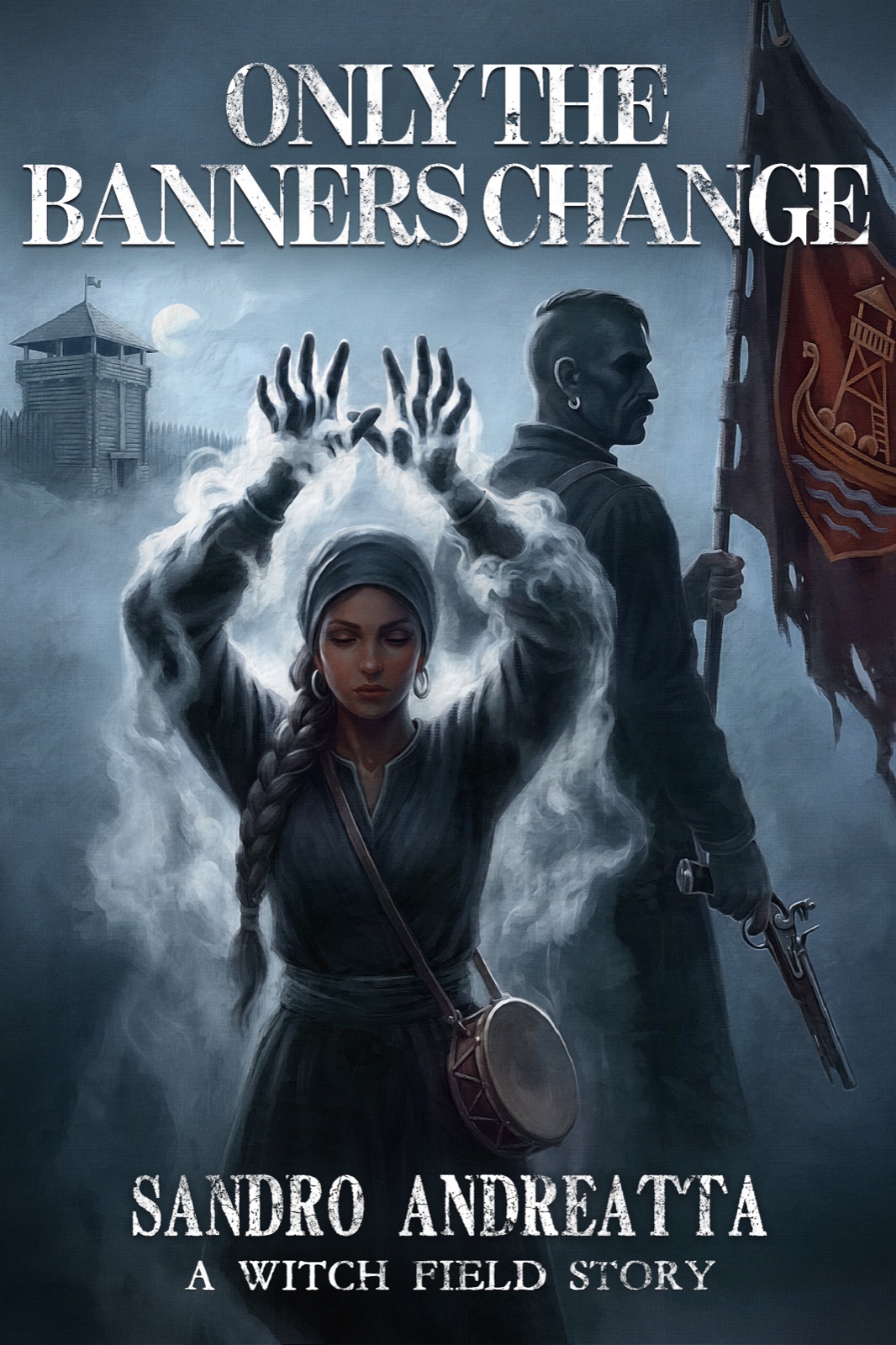
Only The Banners Change
A Witch Field Story
To fight one empire, he marches beneath another's banner and swears the oath that will begin a rebellion. But some oaths survive victory worse than defeat.
Chapter One Epigraph
“All things tend toward a center. History reveals where it was.”
— Cadrin Sol, The Architecture of Collapse
Sandro Andreatta · Historian & Novelist
Book I of The Witch Field Trilogy
Witch-Major Irena Vahn was meant to guide the Covenant's chosen defender. Instead, she watched him die holding a city together as it collapsed around him. The Covenant carved their names into stone and called it victory.
Four years later, another frontier fortress faces annihilation, and the Covenant has found a new doctrine that forces soldiers to keep fighting after fear should have broken them. Extraction works — but every victory concentrates more power, more pressure, and more cost in fewer hands.
Join the mailing list and a free Witch Field story will arrive in your inbox. No spam, just fiction and updates on major releases.
A Witch Field Story
To fight one empire, he marches beneath another's banner and swears the oath that will begin a rebellion. But some oaths survive victory worse than defeat.

A Witch Field Story
Book cover by Guillermo Kelly
Lysa Teren can keep soldiers standing after fear and pain should have broken them. The state calls it a gift. The men she saves learn to call it something else. Every battle gives her another reason to use it.
In Irena Vahn's world, collective belief has physical force. When soldiers share discipline and purpose, the air thickens, smoke moves unnaturally, and formations hold beyond what training alone can explain. Witches do not cast spells. They compress pressure, redistribute it along the line, and release it before it breaks the people carrying it.
Witch-Major Irena Vahn was meant to guide the Covenant's chosen defender. Instead, she watched him die holding a city together as it collapsed inward around him. She carries the scar. The Covenant carved their names into stone and called it victory.
Four years later, another frontier fortress endures months of siege — trenches closing, walls falling, the garrison held together by a doctrine that hollows the men it saves. Beneath the stone, Irena finds the same architecture spreading again: a civilization trying to survive by concentrating too much belief, too much fear, and too much human cost in one place.
Acceptable Loss is early modern military fantasy about a system that works, the people it spends to keep working, and what remains of those it kept alive.
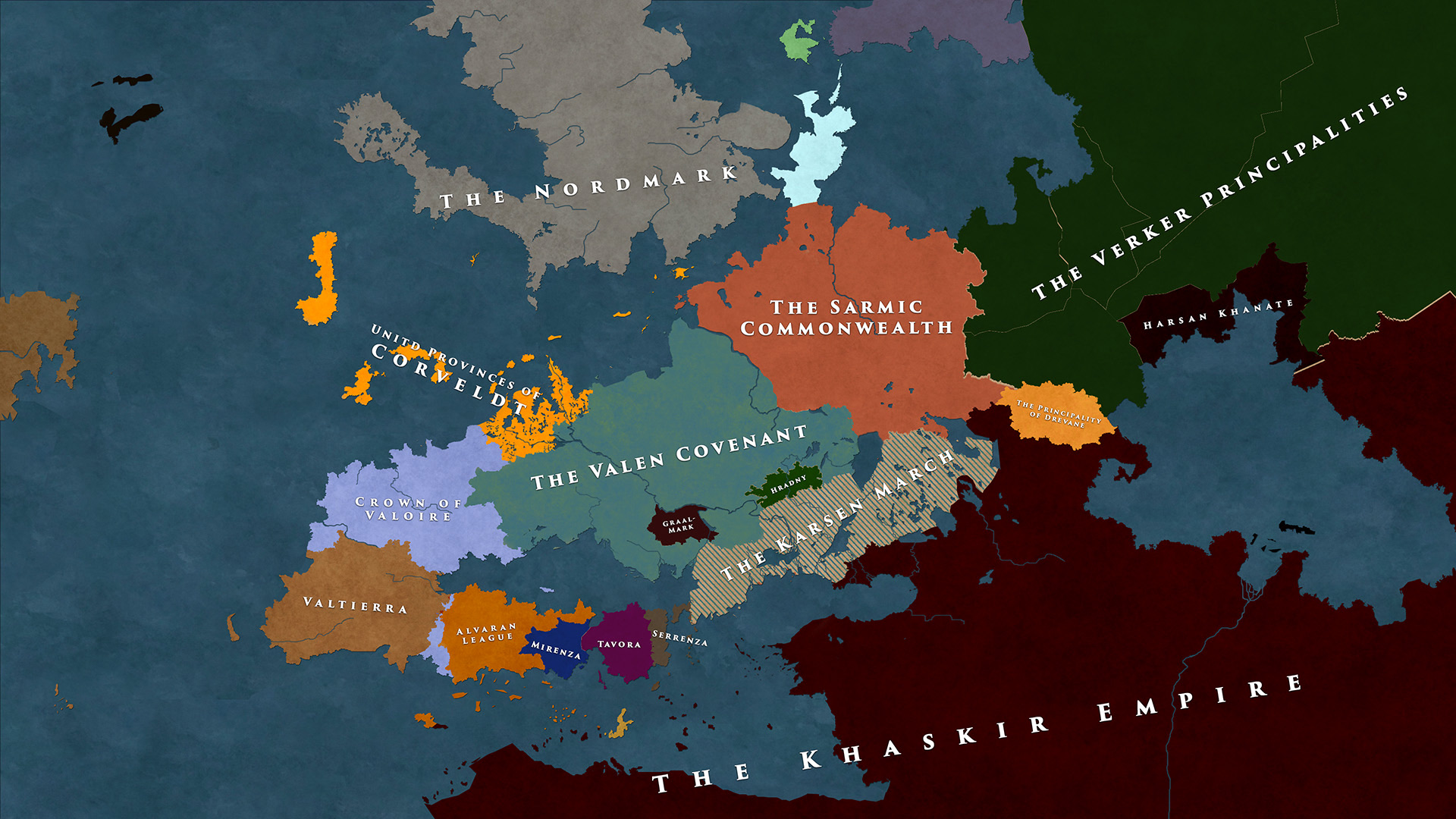
Historical Inspirations
The Witch Field Trilogy draws on the Habsburg Military Frontier, the Zaporozhian Cossacks, the Italian Wars, and the Thirty Years' War — a world of gunpowder armies, frontier societies, fortified cities, and states learning to organize violence at scale.
The magic system asks what happens when shared belief becomes infrastructure. It draws on Yuval Noah Harari's collective fictions, Roland Barthes's theory of myth, James P. Carse's finite and infinite games, and the physics of large systems under pressure — from power-grid load distribution to criticality, phase transitions, and cascading failure.
His fiction draws on narratology, systems thinking, and the philosophy of war: how institutions survive pressure, how belief becomes structure, and how people are spent by the systems built to protect them. Acceptable Loss is his debut novel. He writes military fantasy about systems under strain.
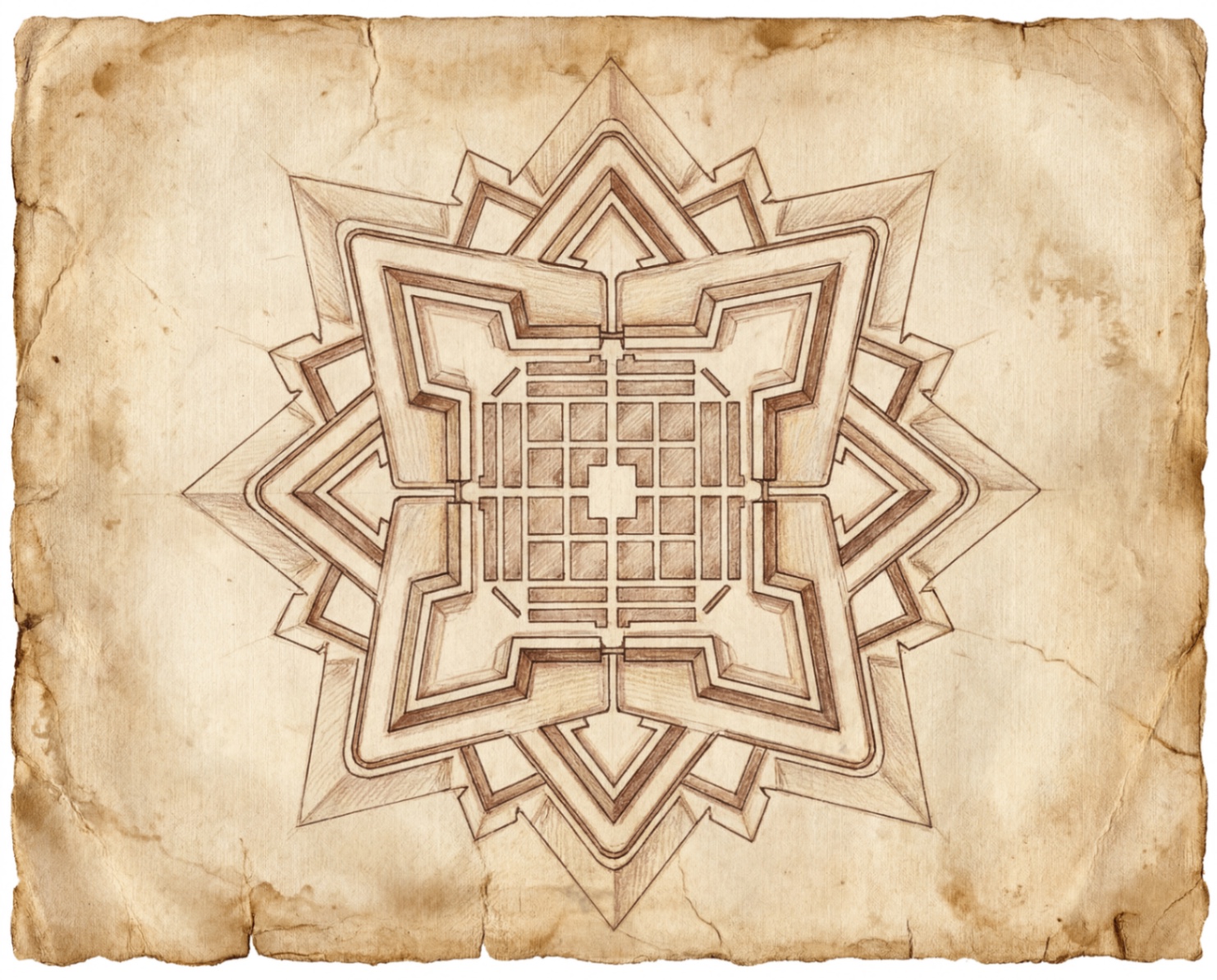
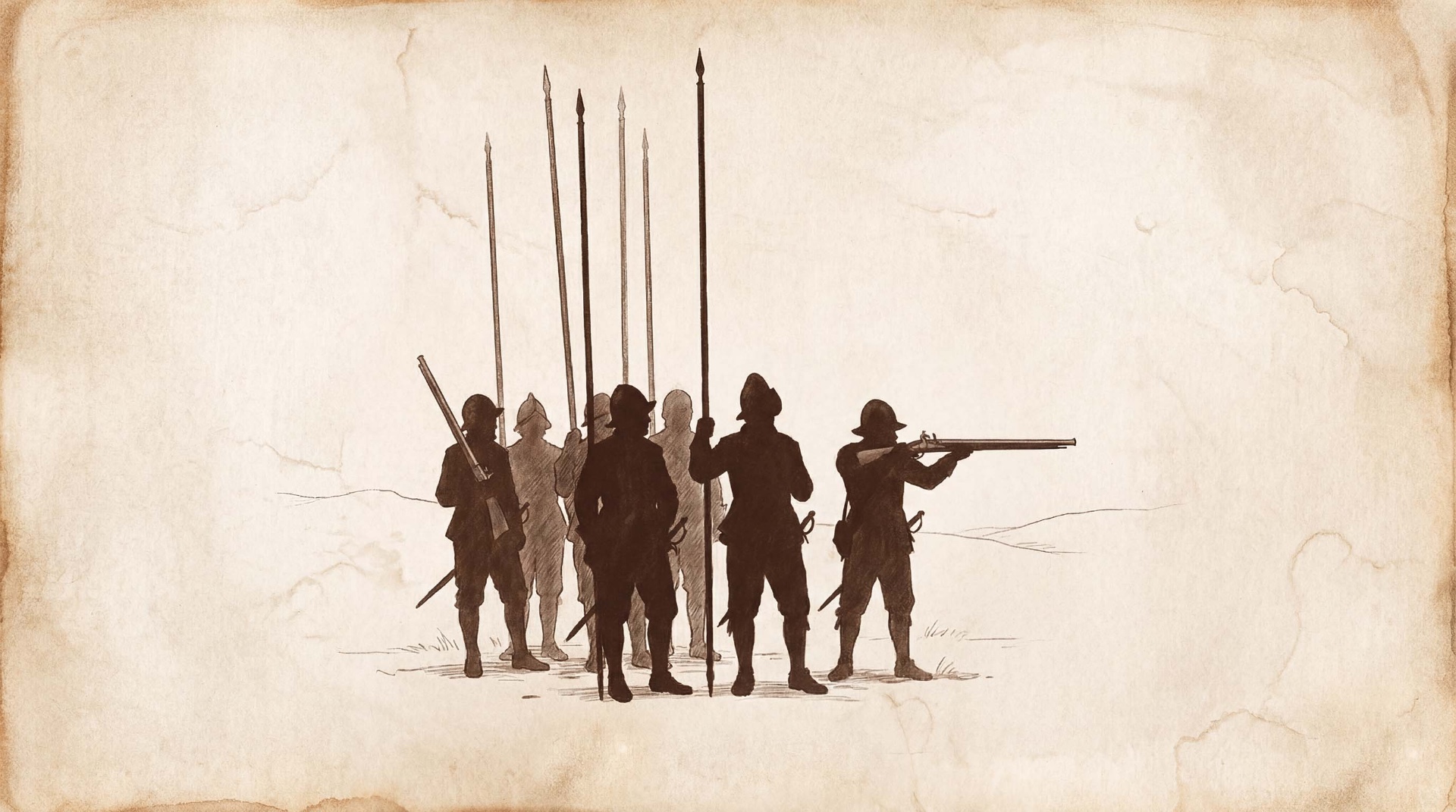
The Field forms wherever enough people hold together — through discipline, belief, story, and shared purpose. It shows itself in air that resists the lungs, smoke that hangs low instead of dispersing, sound flattened by compression, and tremors through stone with no mechanical source.
Witches do not create the Field. They shape how it moves through a formation: compressing it to hold a line, releasing it before the pressure breaks the people carrying it, and redistributing the strain so no single point bears too much.
A system under sustained pressure does not bend forever. It ruptures. And rupture scars everything it touches: stone, air, and the people left alive inside it.
Further Reading
The magic system in Acceptable Loss was built from real-world engineering principles rather than invented from scratch.
The closest model is a power grid. Electrical load is distributed across multiple nodes; when one node fails, its load does not vanish. It moves. The remaining nodes carry more than they were designed for. If enough fail in sequence, the system does not degrade gradually. It cascades.
That is what happens to the frontier. Each fortress carries part of the field's pressure. When Marholt falls, the load moves to Karnhelm, Tor Vale, and Greywatch. When those fail, everything converges on one point. The system was built to distribute pressure. Sequential failure turns distribution into concentration.
The second model is criticality: the study of systems that appear stable until a threshold is crossed. A sandpile grows grain by grain. Each grain seems trivial. Then one more lands, and the whole face collapses.
The third model is structural failure. Bridges, dams, and buildings rarely fail simply because material is weak. They fail because a load path was misjudged, a connection could not flex, or a structure was asked to carry stress at a scale it was never built to survive.
In Acceptable Loss, magic is what makes those invisible pressures visible.
Three words govern how the Field behaves. Together, they describe the cycle that keeps the system alive. When that cycle is broken, the system destroys what it was built to protect.
Compression is what happens when belief concentrates. A formation under fire, a city under siege, a population bound by shared fear or purpose — the Field thickens around them. Pressure builds. The air resists. Sound flattens. Smoke refuses to rise.
Release is what keeps compression survivable. A witch disperses accumulated pressure through the formation: bleeding it sideways, venting it through gaps, letting the Field breathe before the load exceeds what the people inside it can sustain.
Rupture is what happens when release is prevented. Compression builds without an exit. The system becomes rigid — efficient, powerful, and brittle. Under sustained pressure, a brittle system does not bend. It holds until it cannot, then fails all at once.
The question at the center of Acceptable Loss is what happens when the Covenant's own architects redesign the cycle to eliminate release — replacing an elastic system with a rigid one, concentrating pressure through a single human anchor, and calling it strength.